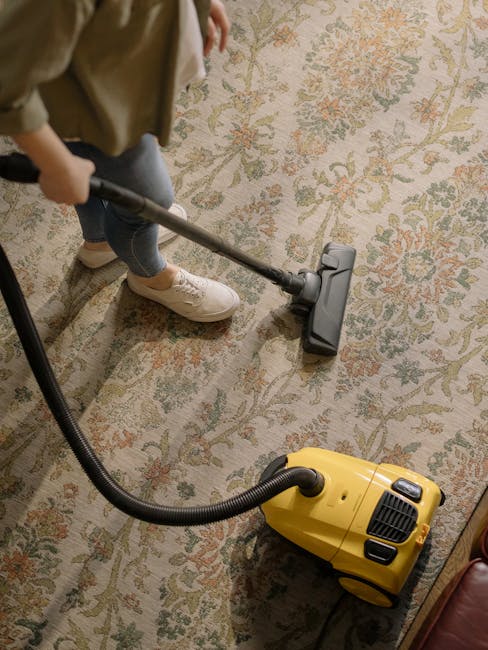
Landlords guide to cleaning rules in Kensington
If you rent property in Kensington, cleaning is rarely just about a tidy finish. It affects inspection outcomes, deposit disputes, tenant satisfaction, and how quickly a flat can be re-let. This Landlords guide to cleaning rules in Kensington breaks down what landlords need to know in plain English, from day-to-day upkeep to end-of-tenancy expectations, so you can stay practical, fair, and on the right side of good letting practice.
Kensington homes tend to be busy homes. High traffic, older finishes, prized carpets, polished wood floors, and the occasional stubborn stain all change what "clean enough" really means. The trick is to set standards early, document them clearly, and use a consistent process every time. That way, you avoid the awkward back-and-forth later on. And yes, that matters more than people think.
Table of Contents
- Why landlord cleaning rules matter in Kensington
- How cleaning expectations usually work
- Key benefits and practical advantages
- Who this guide is for
- Step-by-step guidance for landlords
- Expert tips for better results
- Common mistakes to avoid
- Tools, resources and recommendations
- Law, compliance, standards and best practice
- Options and method comparison
- Case study example
- Practical checklist
- Conclusion
- Frequently asked questions
Why Landlord cleaning rules matter in Kensington
Cleaning rules are the quiet backbone of a smooth tenancy. In a place like Kensington, where rental homes often include premium finishes, shared entrances, and sensitive flooring or upholstery, the standard you set has a direct effect on property condition over time.
For landlords, the big reason is simple: cleaning disputes are one of the easiest ways for a move-out to become messy. Not literally, although that happens too. If a tenant leaves behind grease in the oven, marks on a sofa, or visible soil in a hallway carpet, the next question is whether the property was handed over in the agreed condition. Without a clear cleaning standard, everyone remembers the move-out differently.
There is also a reputation angle. A clean property photographs better, views better, and feels cared for. That is especially important in Kensington, where tenants often compare multiple polished listings and notice small details quickly. Sticky kitchen cupboards, dusty skirting boards, or water marks on bathroom glass can make a good flat feel tired.
Good cleaning rules also help protect the asset itself. Regular maintenance reduces wear on carpets, hard floors, curtains, mattresses, and upholstered furniture. If you delay too long, small jobs become expensive ones. A bit of attention now saves a lot of stress later.
Expert summary: the best landlord cleaning rule is not "clean everything perfectly every time"; it is "set a fair standard, record it, and repeat it consistently." That one habit prevents most disputes.
How Landlord cleaning rules usually work
In practice, landlord cleaning expectations usually sit across three moments: before a tenancy begins, during the tenancy, and at the end of the tenancy. Each stage has a different purpose.
1. Before move-in
Before a tenant moves in, the property should be handed over in a clean, safe, and presentable state. This is where a move-in cleaning service can be useful if you want a structured reset after repairs, decorating, or a void period. It is not only about appearance. It is about giving the incoming tenant a clear baseline.
2. During the tenancy
Tenants are normally expected to keep the property reasonably clean and report problems early. Landlords, on the other hand, usually focus on maintenance-led cleaning where needed, especially in communal spaces or where the property is managed as part of a wider building. For flats and shared buildings, communal area cleaning can be important to keep entrances, stairwells, and shared touchpoints in good order.
3. At move-out
This is the stage most landlords care about most, because this is where deposit disputes often start. The tenant should return the property in the condition specified in the tenancy agreement, allowing for fair wear and tear. The landlord then checks whether the property needs spot cleaning, deeper cleaning, or specialist work such as end of tenancy cleaning.
The exact approach depends on the property. A one-bedroom Kensington flat with wool carpets, a fitted oven, and white upholstery is a different beast from a newly refurbished studio. To be fair, every property has its own personality. Slightly annoying, but true.
Key benefits and practical advantages
Clear cleaning rules do more than keep a property looking nice. They create structure. And structure is what saves time.
- Fewer disputes: a written cleaning standard reduces arguments about what was expected.
- Faster re-letting: a cleaner property can usually be marketed sooner and with fewer last-minute fixes.
- Better tenant experience: tenants feel they are moving into a property that has been properly cared for.
- Longer life for fixtures: regular maintenance helps carpets, mattresses, sofas, curtains, and floors last longer.
- Lower surprise costs: small cleaning tasks are cheaper than emergency deep cleans.
- Stronger presentation: a property that feels fresh always shows better in Kensington's competitive rental market.
If you manage multiple homes, the practical benefit is consistency. One property can be handled almost like another, which is a huge help when you are juggling inspections, contractors, and viewings. Nobody has time for guesswork. Not really.
Landlords who use a recurring cleaning plan often find it easier to budget too. A schedule built around regular cleaning or periodic deep cleans is much easier to manage than reacting after every issue has already become visible.
Who this guide is for and when it makes sense
This guide is for landlords, letting agents, property managers, and accidental landlords who want a clearer handle on cleaning standards in Kensington. It is also relevant if you manage a short-let, a furnished apartment, or a building with shared spaces.
It makes sense to tighten your cleaning approach when:
- you are preparing a new tenancy;
- a tenant is moving out and the checkout is coming up;
- your property includes carpets, rugs, sofas, curtains, or mattresses;
- you are managing a high-end flat where presentation really matters;
- your building has shared hallways or lobby areas;
- there has been smoking, pet activity, heavy cooking, or spill damage;
- you want to reduce deposit disputes and void-time delays.
A landlord of a compact Kensington flat, for example, may need to focus heavily on kitchen grease, limescale, and carpet freshness. A larger period property may need more attention to upholstery, sash windows, and hard floors. Different properties, different pain points. That's the real world.
If your portfolio includes short-term lets or serviced-style rentals, a more frequent turnover clean may be needed. In those cases, services like Airbnb cleaning can be more appropriate than occasional reactive cleaning, because turnaround time matters just as much as appearance.
Step-by-step guidance for landlords
Here is the most practical way to handle cleaning rules without overcomplicating things.
Step 1: Put the standard in writing
Do not leave cleaning expectations vague. State what the tenant is responsible for, what "reasonably clean" means in your property, and whether professional cleaning is required at move-out. Make sure the tenancy agreement is clear and consistent with your actual practice.
Step 2: Create a property-specific checklist
One kitchen may need oven attention and limescale removal; another may need hard floor polishing and stain removal from bar stools. Write down the areas that matter for the specific property, not just a generic list.
Step 3: Photograph the condition at check-in
Take clear, date-stamped photos before the tenancy starts. Focus on carpets, bathrooms, kitchen appliances, windows, upholstery, and any pre-existing marks. This is boring admin, yes, but it pays off later.
Step 4: Inspect gently during the tenancy
If your agreement allows inspections, use them to spot early issues before they become expensive ones. You are looking for accumulations: grease, dust build-up, mould risk, odours, and wear in high-touch places.
Step 5: Decide when specialist cleaning is needed
Some jobs are not really "quick cleans". A stained rug, a tired sofa, or a pet odour issue may need professional treatment. That is where specialist services like rug cleaning, sofa cleaning, or pet stain odour removal can make a genuine difference.
Step 6: Book the right clean at the right time
After repairs or decorating, a deep cleaning pass may be the most efficient option. If builders have been in, dust and fine debris can settle in places you would not expect. In that case, after builders cleaning is often the smarter route than trying to patch clean room by room.
Step 7: Keep evidence after the clean
Save invoices, photos, and notes. If there is ever a checkout disagreement, you will want proof of what was done and when. Simple, but vital.
Expert tips for better results
After handling enough move-outs and make-ready cleans, a few patterns become obvious.
Focus on the "high-friction" areas first. Kitchens, bathrooms, carpets near entrances, sofas, oven interiors, and windows tend to create the biggest impression. If these are clean, the property usually feels fresh even before every tiny detail is finished.
Use the right method for the surface. A hard floor needs a different approach from laminate, stone, or engineered wood. Likewise, a curtain does not get treated like a wall. Obvious, maybe, but this is where damage happens when people rush.
Do not ignore odours. Smell is often what a viewer notices before they consciously register a stain. Old cooking smells, pet odours, and damp air can linger even when surfaces look tidy.
Always check under, behind, and inside. Under beds, behind radiators, inside cupboards, beneath sofas, around bin areas, and along window tracks. That is where a rushed clean gives itself away.
Use a reset clean after long voids. If a property has stood empty or been used by contractors, a proper reset is usually worth it. Combine it with window cleaning and, where relevant, oven cleaning to restore the whole feel of the home.
Little things add up. A clean light switch, a streak-free mirror, a fresh hallway carpet - these details change the mood of a property more than people expect.
Common mistakes to avoid
Some landlord cleaning problems come up again and again. The good news is they are avoidable.
- Being too vague in the tenancy agreement: if the cleaning standard is not clear, disputes become almost inevitable.
- Expecting perfection instead of fair condition: tenants are usually responsible for reasonable cleanliness, not showroom standards.
- Leaving cleaning until the final day: by then, there is no margin for delay if a specialist job is needed.
- Forgetting soft furnishings: carpets, sofas, mattresses, and curtains hold smells and dust that hard surfaces do not.
- Using harsh products on delicate finishes: one wrong cleaner can damage floors or fabrics fast.
- Overlooking shared spaces: in flats, the first impression often starts in the communal hallway.
- Not documenting the starting condition: without evidence, checkout conversations become memory contests.
A common one, especially with furnished rentals, is assuming a surface clean is enough. It often is not. A sofa can look okay and still hold odours. A carpet can look acceptable and still have embedded soil. That's why specialist treatments sometimes make more sense than another round of DIY spray-and-wipe.
Tools, resources and recommendations
You do not need a warehouse full of gear, but you do need the right basics. For landlords managing their own properties, the useful toolkit is fairly modest.
- microfibre cloths for dust and polishing;
- appropriate non-abrasive cleaners for kitchens and bathrooms;
- vacuum equipment with attachments for edges and upholstery;
- floor-safe products matched to the surface;
- protective gloves and basic safety kit;
- photo storage for before-and-after evidence;
- a simple checklist for inspections and move-outs.
If you outsource, choose a provider that is clear about process, access, safety, and what happens if something is missed. It is also sensible to look at practical pages such as pricing and quotes, insurance and safety, and the business's terms and conditions so you know where you stand before work begins.
If sustainability matters to you or your residents, it can also help to ask how waste and product choices are handled. Many landlords now prefer cleaning approaches that are compatible with recycling and sustainability goals, especially where packaging, water use, and product disposal are part of the conversation.
Law, compliance, standards and best practice
Cleaning rules for landlords are not usually about a single dramatic law. They are more about reasonable expectations, tenancy wording, property condition, health and safety, and good documentation. That is why careful wording matters.
In UK letting practice, a landlord generally needs to hand over a property that is safe and fit for occupation, while a tenant is normally expected to keep it reasonably clean and not cause avoidable damage. The exact boundary depends on the tenancy agreement, the property condition at check-in, and whether any issues are simply fair wear and tear.
Where cleaning touches safety, be cautious. Slippery floors, mould-prone bathrooms, dirty extractor areas, and neglected communal spaces can all create risks. For work carried out by contractors, it is sensible to expect clear safety procedures and appropriate insurance. A landlord should not guess here.
Best practice usually includes:
- written cleaning standards in the tenancy or welcome pack;
- check-in and check-out inventories with photos;
- clear assignment of responsibility for carpets, upholstery, and appliances;
- recorded maintenance for shared areas;
- safe handling of cleaning products;
- evidence of professional work where specialist cleaning is needed.
For landlords dealing with offices, mixed-use buildings, or commercial spaces in Kensington, the same principles apply, though the standards may shift. In those cases, commercial cleaning and office cleaning may be more suitable than domestic routines.
Options and method comparison
Here is a simple comparison to help you choose the most sensible cleaning approach for the situation in front of you.
| Method | Best for | Strengths | Watch-outs |
|---|---|---|---|
| DIY landlord cleaning | Light resets, occupied properties, quick touch-ups | Low cost, flexible timing | Easy to miss hidden dirt or odours |
| Regular scheduled cleaning | Managed rentals, busy tenants, shared homes | Prevents build-up, keeps standards steady | Needs a routine and follow-through |
| Deep cleaning | Void periods, neglected rooms, post-refurbish reset | More thorough, better for overall freshness | More time and coordination required |
| End-of-tenancy cleaning | Check-outs and deposit-sensitive move-outs | Targets checkout expectations, more comprehensive | Must be booked with the right timing |
| Specialist fabric or stain work | Carpets, sofas, mattresses, stains, pet issues | Addresses specific problems properly | Needs the right method for each material |
In plain terms: if the property only needs a light refresh, do not overbuy a full reset. But if carpets are tired, the oven is greasy, or the sofa smells a bit off on a humid morning, a specialist approach is usually worth it. A half-fix often costs more in the long run.
Case study or real-world example
Here is a realistic Kensington scenario. A landlord is preparing a furnished one-bedroom flat for a new tenant after a twelve-month tenancy. The checkout shows the property is tidy overall, but the kitchen has grease inside the extractor area, the hallway carpet has a traffic mark by the front door, and the sofa carries a faint pet smell from a small dog that lived there for six months.
At first glance, none of these is catastrophic. But together they change how the flat feels. The landlord could spend a day trying to tackle everything manually, with mixed results. Or they could break the job into sensible parts: a targeted kitchen clean, carpet cleaning for the hallway, and sofa cleaning alongside pet stain odour removal.
The second route usually gives a much more consistent finish. More importantly, it makes the property easier to market. Prospective tenants walk in, take a breath, and the flat feels cared for. That first impression is powerful. A little unfair, maybe, but very real.
What the landlord learns here is simple: not every problem should be treated as "general cleaning". Matching the method to the issue saves time and improves outcomes. That is the sort of detail that keeps a Kensington portfolio looking sharp without constant firefighting.
Practical checklist
Use this quick checklist before a new tenancy or after a tenant moves out.
- Confirm the cleaning standard in writing.
- Take check-in photos of all rooms and key fixtures.
- Inspect the kitchen, bathrooms, carpets, windows, and upholstery.
- Check for odours, stains, grease, limescale, and dust build-up.
- Decide whether you need regular, deep, or end-of-tenancy cleaning.
- Book specialist help for carpets, rugs, sofas, mattresses, or ovens if needed.
- Record all work completed and save invoices.
- Review communal areas if the property is in a shared building.
- Re-check after cleaning, not before. Fresh eyes catch things.
- Make sure the property feels clean, not just looks clean in one corner.
If you are balancing several jobs at once, that checklist alone can stop things slipping through the cracks. Honestly, it is the sort of small process that saves a lot of future noise.
Conclusion
Cleaning rules for landlords in Kensington work best when they are clear, fair, and repeatable. Set the standard early, document the property properly, and match the cleaning method to the actual problem rather than hoping a quick wipe will handle everything. That is especially true in furnished homes, high-value flats, and properties with carpets, upholstery, or shared spaces.
The aim is not to be fussy for the sake of it. The aim is to protect the property, reduce friction, and create a home that feels ready for the next person walking through the door. When you get that right, the whole process becomes calmer. Less chasing, less guessing, fewer awkward conversations.
Get a free quote today and see how much you can save.
And if you keep one thing in mind from this guide, make it this: clean properties are easier to manage, easier to let, and much easier to feel good about at the end of a long day.
Frequently Asked Questions
Do landlords in Kensington have to provide a professionally cleaned property?
Not always, but the property should usually be clean, safe, and presentable at the start of a tenancy. Whether professional cleaning is needed depends on the property condition, the tenancy agreement, and what is reasonable for that specific home.
Can a landlord require end-of-tenancy cleaning?
Many landlords ask for the property to be returned in a professionally cleaned condition, but the wording in the tenancy agreement matters. The key is that the expectation should be clear, fair, and aligned with the condition of the property at check-in.
What cleaning issues cause the most deposit disputes?
Carpets, ovens, bathrooms, sticky kitchen surfaces, marks on walls, and lingering odours are common flashpoints. In furnished homes, sofas, mattresses, and rugs can also become part of the discussion.
Should I use a checklist for every tenancy?
Yes, absolutely. A checklist keeps standards consistent and gives you evidence if questions come up later. It also helps you spot which rooms or items need more attention from one tenancy to the next.
How often should a rental property be deep cleaned?
That depends on usage, tenant turnover, and the type of property. Some landlords do it between tenancies, while others schedule it less often and focus on maintenance in between. If the home has heavy use, more frequent deep cleaning can be sensible.
What if the tenant says the property was already dirty?
That is where your check-in inventory and photos matter. If you can show the pre-tenancy condition clearly, it becomes much easier to resolve disagreements calmly and fairly.
Are carpets and sofas included in cleaning rules?
They often are, especially in furnished properties. Soft furnishings hold dirt and odours more easily than hard surfaces, so landlords should decide upfront whether specialist treatment is expected before move-out.
What is the difference between regular cleaning and deep cleaning?
Regular cleaning keeps a property on top of day-to-day dirt. Deep cleaning goes further, targeting built-up grime, neglected corners, appliances, and hidden areas that standard cleaning can miss.
Is it worth booking window cleaning before a new tenancy?
Yes, particularly in Kensington where presentation really matters. Clean windows lift the whole look of a property and make rooms feel brighter, which helps both viewings and photos.
How do I handle cleaning in communal areas?
Shared spaces should be handled separately from the private flat or house. A clear routine for entrances, hallways, stairs, and touchpoints helps keep the whole building looking cared for and avoids complaints from residents.
Can specialist cleaning help with pet-related issues?
Yes. Pet-related marks and smells often need more than basic surface cleaning. Treatments for carpets, sofas, rugs, and odours can make a noticeable difference when a pet has lived in the property.
What is the best first step if I want to improve my cleaning process?
Start by writing a property-specific cleaning standard and using photos at check-in. From there, it becomes much easier to decide when you need regular cleaning, a deep reset, or specialist help for items like carpets or upholstery.